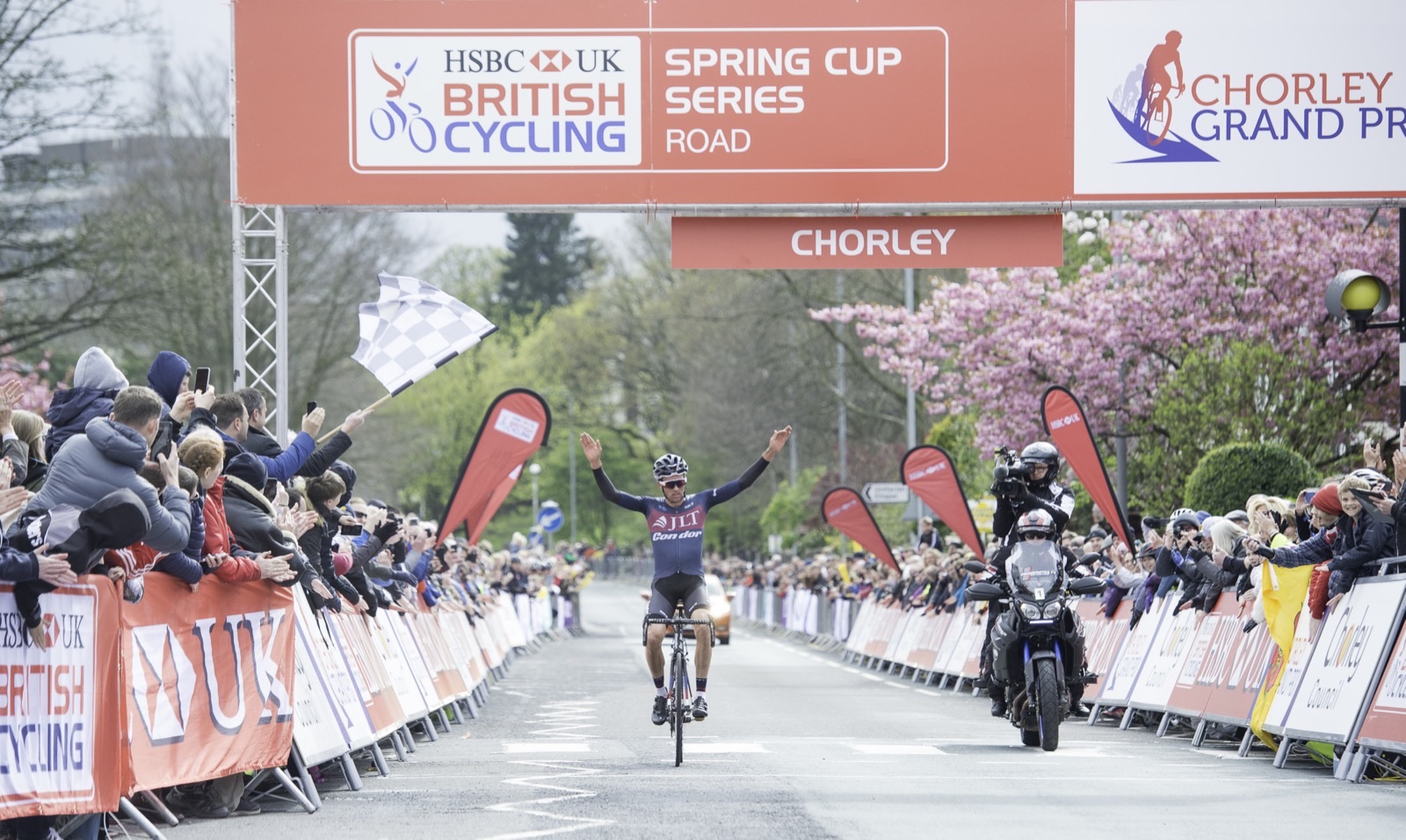
Criteriums are where the strongest rider doesn’t always win. In fact, crits are probably the discipline where raw power matters least and race craft matters most. I’ve watched riders with monster engines get spat out the back of a crit because they couldn’t hold a wheel through a tight corner, and I’ve seen lighter, scrappier riders walk away with prizes because they were in the right place at the right time.
Winning the National Criterium Championship was one of the highlights of my career, not because it was the hardest physical effort I ever put in, but because everything had to come together: positioning, timing, reading the race, and nailing the last few corners when it mattered. That’s what makes crits brilliant and brutal in equal measure.
If you want to get better at crit racing, forget about FTP for a minute. This is about how to race, not just how to ride.
Criteriums are where the strongest rider doesn’t always win. Race craft matters more than raw power.
— Ian Bibby, National Criterium Champion
What Makes Crits Different
A road race might last four or five hours with long stretches where nothing happens. A crit is the opposite. Short circuit, usually under 2km, 30 to 50 laps at full gas, corners every few seconds, done in an hour or less.
That changes everything. In a crit, if you lose your position, you might never get it back. The elastic snaps that much quicker on a tight circuit. You can’t drift to the back for a gel and casually work your way up again.
Crits reward bike handling above almost everything else. If you can carry speed through a corner while the rider next to you is braking and then sprinting back up to speed, you’re saving energy every single lap. Over 40 laps, that advantage is enormous.
Positioning: Near the Front Without Burning Yourself Out
The single biggest factor in a criterium is where you are in the bunch. Top 10 to 15 positions, and you can see what’s happening, respond to attacks, and hit the corners with clear air. Back of the bunch, and you’re slamming on the brakes every corner, sprinting out of every turn, and riding yourself into the ground just to stay in contact.
But there’s a trap here. Some riders hear “ride near the front” and plant themselves on the very front of the race, pulling into the wind for lap after lap. That’s not positioning. That’s doing everyone else’s work. The sweet spot is top 10 to 15 without being on the actual front.
How do you hold that position? A few things I’ve learned:
- Move up on the straights, not in the corners. It’s much easier and safer to gain positions on a straight section than trying to dive up the inside of a corner. Gradually drift forward when the pace is steady.
- Use the sheltered side. On a windy circuit, the sheltered side of the road costs less energy. Think about the wind direction every lap and position accordingly.
- Don’t fight for every single wheel. If someone cuts in front of you and you drop from 8th to 12th, that’s fine. Don’t burn a match panicking about it. You can move back up smoothly on the next lap.
- Be assertive, not aggressive. Hold your line, don’t leave gaps, and don’t be afraid to use your elbows a bit. If you ride timidly, people will ride over you. You don’t need to be dirty, just confident.
The Sweet Spot
The riders who look effortless in crits aren’t stronger than everyone else. They’re just smarter about where they sit.
Cornering at Speed
This is where crits are won and lost. Every corner is an opportunity to either save energy or waste it. If you’re braking hard into every turn and then sprinting out of it, you’re doing the crit equivalent of interval training every lap, and you won’t last.
The goal is to carry as much speed through the corner as possible. That means:
- Brake before the corner, not in it. Get your braking done early, then let the bike roll through the turn. Braking mid-corner unsettles the bike and kills your momentum.
- Look where you want to go, not at the kerb or the rider next to you. Your bike follows your eyes. Look through the exit of the corner and your line will follow.
- Outside pedal down, inside knee out. This is basic but I still see experienced racers getting it wrong. Weight on the outside pedal, drop the inside knee slightly to counterbalance, and let the bike lean underneath you.
- Take the widest line you can get away with. In a bunch you rarely get to pick your ideal line, but the wider and smoother you can make your arc, the faster you’ll carry speed.
UK crit circuits have their own quirks. A lot of them are industrial estates or town centre loops with rough tarmac, painted road markings, and manhole covers. Painted lines and metal covers are lethal when wet. Learn the circuit on your first few laps. Note where the dodgy surfaces are and adjust your line. A three-second recce of the course before the race starts is time well spent if you can manage it.
One more thing: trust your tyres. Modern rubber grips far better than most riders think, especially when the bike is upright before and after a corner. The riders who crash in corners are usually the ones who panicked and grabbed a handful of brake mid-turn. Smooth inputs, smooth corners.
When to Attack
This is the real art of crit racing. Anyone can put in a hard effort. Knowing when to do it is what separates the winners from the also-rans.
First, read the race. Pay attention to who’s strong, who’s struggling, and which teams are organised. If one team is controlling the front, they’re probably setting up for their sprinter, and that tells you something. If nobody’s organised and it’s chaos, that’s an opportunity for a solo move or a small breakaway.
A few principles on timing your attacks:
- Attack when others are suffering, not when you’re feeling good. After a hard surge or a technical set of corners, that’s when legs are hurting and gaps open. Your move will stick better when the bunch is strung out.
- Don’t attack from the front. Slide back a few positions, then use the acceleration to launch past and get an immediate gap. Attacking from the very front just ups the pace for everyone behind you.
- Counter-attack, don’t chase. When a break gets caught, the bunch eases up. That’s when you go. Punish that relaxation.
- Commit fully or don’t bother. Half-hearted attacks waste energy. If you go, go properly. Gap, head down, ride. Two bike lengths isn’t a gap. Sit up and save it.
Identifying threats is equally important. Know who the dangerous riders are before the race starts. Watch who’s moving easily through the bunch, who’s fighting for position near the front, and who’s sitting on wheels looking comfortable. Those are the ones you need to mark.
The Last-Lap Playbook
This is where championships are decided. The last lap is controlled chaos, and where you are going into it determines everything.
My approach was always to set things up from about three corners out. Not the final straight, but three corners before the finish. If you’re well-positioned with three corners to go, you have time to work the bunch. Leave it until the final corner and you’re gambling.
The playbook:
Three Corners Out
Two Corners Out
Last Corner
The Sprint
The key to all of this is being able to corner fast. If you lose five metres in each of the last three corners because your cornering is poor, you’re going into the sprint with a 15-metre deficit. That’s the race right there.
One more tactical point: if you know you’re not the fastest sprinter in the race, don’t sprint against the fastest sprinter. Attack with two laps to go, or half a lap to go, or out of the last corner. Make them chase you rather than lining up for a drag race you’ll lose.
Training for Crits
Crit fitness is different from time trial fitness or climbing fitness. You need a solid aerobic base, yes, but you also need the ability to repeatedly punch out hard efforts and recover while still riding at a high pace.
Here’s what I’d focus on:
VO2max Repeats
Sprint-Out-of-Corners
Threshold With Surges
Group Practice
Common Mistakes
I’ve watched hundreds of crit races and coached riders through plenty more. The same mistakes come up again and again.
The #1 Crit Killer
Sitting at the back. This is the number one killer. Riders who sit at the back think they’re saving energy, but they’re actually using more. The concertina effect through corners means you’re constantly braking and sprinting. Plus you can’t see what’s happening and you’ll miss every move. Get out of the back third or accept you’re racing for nothing.
Over-chasing breaks. Not every attack needs a response. If three riders go off the front and none of them are threats, let them go. They’ll probably come back. The worst thing you can do is chase every single move. You’ll be empty when the real move goes. Learn to judge which breaks are dangerous and which are just enthusiasm.
Panicking after a crash. Crashes happen in crits. If there’s a pile-up ahead of you, stay calm. Brake smoothly, avoid it, get back up to speed. Don’t slam to a dead stop if you can help it. If you go down and you’re not hurt, get up and get going. The bunch often neutralises after a crash.
Neglecting a warm-up. Crits start fast. Roll to the line cold and you’ll be in oxygen debt for the first five laps. Do 15 to 20 minutes with a few hard efforts to open the legs. Be ready to race from metre one.
Overcooking corners. Dive-bombing up the inside of a corner is how you crash yourself and others. Gain positions on the straights, carry speed through the corners. Not the same thing.
Get Tactical Coaching That Goes Beyond the Numbers
Crits are the most fun you can have on a bike in competition. They’re fast, they’re tactical, and they reward smart riders who put in the work to develop their race craft alongside their fitness.
A power meter and a training plan will get you fit. But fitness alone won’t win you a crit. You need to understand positioning, read a race, time your efforts, and execute under pressure. That’s the stuff that comes from experience, and from working with someone who’s been there.
If you want coaching that includes race tactics and strategy, not just fitness numbers, get in touch. I work with riders on everything from interval sessions to race-day game plans, because winning races takes more than a big FTP. Check out my cycling coaching packages to see how we could work together.
Now go find a local crit, pin a number on, and put some of this into practice. You’ll make mistakes. Everyone does. But every race teaches you something, and before long you’ll be the one sitting calmly in the top 10 while everyone else is panicking behind you.
Want race-specific coaching from a National Criterium Champion? Get in touch to discuss how we can sharpen your racing, not just your fitness.