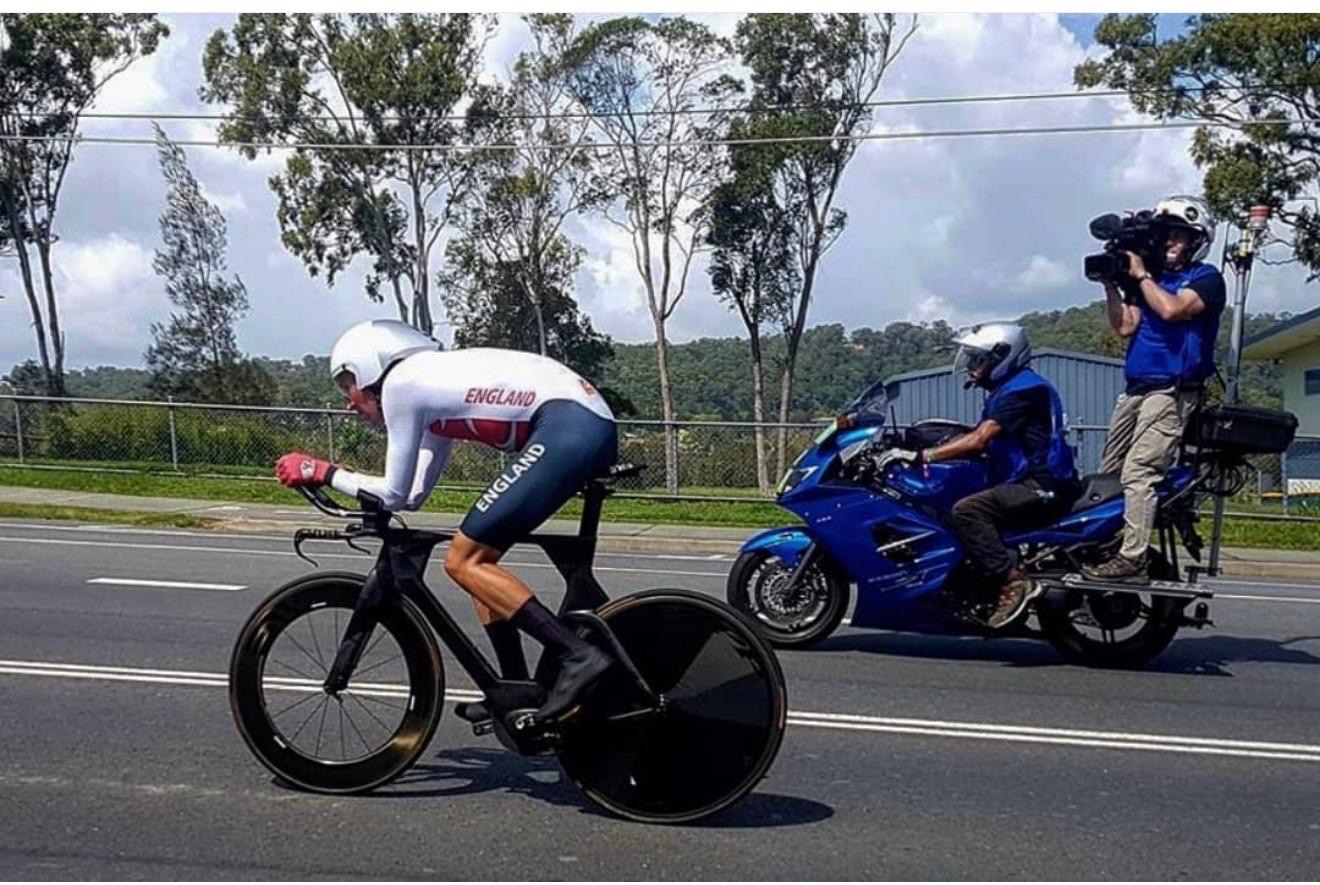
Time trials are often called “the race of truth” for a reason: no peloton, no drafting, just you versus the clock. I’ve done my fair share of suffering in TTs, both as a pro racer and now coaching riders for their own “truth sessions.” Time trialling might look simple – ride from A to B as fast as possible – but doing it well is an art. Here’s my no-nonsense advice to improve your time trial performance, whether you’re aiming for a local club 10-mile TT or a national championship.
Aerodynamics is (Almost) Everything
In time trials, aerodynamics is king. At race speeds, wind resistance gobbles up the majority of your power – studies show that at ~45 km/h, aerodynamic drag can account for up to 90% of the resistance a cyclist fights against. The biggest factor in that equation is you: your body position accounts for around 80% of drag on the bike.
So, focus on getting low and narrow on your TT bike or road bike with clip-ons. A proper bike fit or at least some garage tinkering can massively reduce your drag. I’m blunt about this: if your position looks “comfortable,” it’s probably not aero enough.
- Tuck in that head
- Shrug your shoulders
- Flat back
- Aim to present as small a frontal area as possible
Of course, you still need to produce power in that position, so practice riding in the aerobars often. Equipment matters too (a pointy helmet, skinsuit, deep-section wheels all help), but don’t blow your budget all at once.
Get the basics first: an aero helmet and a snug skinsuit give huge bang for buck. But remember, an aero bike won’t pedal itself – you provide the engine.
Pacing: Don’t Start Too Hard
Here’s a brutally common mistake in TTs: blowing up halfway because you went out like a rocket. We’ve all been there – adrenaline surges, you blast off the start ramp feeling invincible… and then the last few miles are agony as your power fades.
To achieve your best time, you must pace yourself evenly (or even slightly negative-split, meaning finish stronger than you start). I tell my riders to hold back a touch in the first quarter of the effort. It should feel too easy for the first minute or two.
If you’re using a power meter:
- Target about 5-10% below your goal wattage initially
- Then settle into your rhythm
If not:
- Use perceived effort or heart rate
- It should feel hard but sustainable, not all-out
Remember: it takes discipline to hold something in reserve, but passing riders who blew up is way more fun than being passed because you exploded. For longer TTs (25 miles, 50 miles), pacing and fueling go hand in hand – ensure you’re sipping an energy drink or gel for anything around an hour or more.
Even pacing, proper fueling, and a strong finish can shave minutes off your time.
Train Specifically for Time Trials
If you want to get better at TTs, you need to train the specific energy systems and muscles used in TTs. That means embracing threshold and sub-threshold workouts. I won’t lie – these are mentally tough sessions.
Key TT Workouts:
- 2 x 20 minutes at your FTP (or at a hard steady effort where you’re on the limit of sustainable) with 5-10 min easy between
- Classic “10-mile TT” workouts: 10 minutes on, 5 minutes easy, repeated 3-4 times at just above your target race power
- Longer steady tempo rides to build endurance for longer events
- Fast-start efforts: sprint for 30 seconds, then settle to TT effort to simulate real TT starts or hills
These teach you to hurt and hold it. Don’t neglect practicing in your aero position during training; your neck, back, and backside need conditioning to stay tucked for 20, 30, 60 minutes. Over time, you’ll raise the power you can sustain in a tuck, which is pure gold for a time trialist.
Mind Games and Focus
Time trials hurt – there’s no sugar-coating it. The solitary nature means it’s just you and that little devil on your shoulder telling you to ease up. Winning that mental battle is huge.
Mental Strategies:
Break the course into sections. Don’t think about a 25-mile TT as one giant grind; think “just 5 miles to the next marker” or “hold this power to the turn-around.” Setting mini-goals keeps you engaged and gives a sense of progress.
Positive self-talk helps more than you think. I often repeat a mantra or recall a tough training day I survived to remind myself I can do this.
Pre-decide your response to suffering. Everyone hits a moment in a TT where quitting or backing off sounds tempting – decide before the race how you’ll respond. Maybe it’s “I didn’t suffer through all those training sessions to give up now.” Find what motivates you.
Practice your pre-race routine:
- Get to the event early
- Warm up thoroughly (20-30 min with a few short hard efforts to wake the legs)
- Know the course
- Double-check your gear
A calm mind can focus fully on the suffering ahead! Time trialling is as much a mental test as a physical one – sharpen your mind and the results will follow.
Marginal Gains vs. Major Gains
You’ve likely heard of marginal gains – those tiny improvements that together make a difference. In TTs, people get obsessed with things like ceramic bearings or aero shoe covers. My take: focus on the major gains first.
Major gains:
- Position and power
- Being aero and fit will beat an unfit rider with the fanciest gear every time
Once you’ve maximized those, then look at the details:
- Make sure your bike is tuned (a squeaky drivetrain can cost a few watts)
- Tire choice and pressure – good quality tires at the right pressure can save significant time
- A well-fitting skinsuit is practically free speed
- An aero helmet can easily save 30+ seconds in a 25-mile TT compared to a standard road helmet
But don’t get lost down the rabbit hole of exotic upgrades if you haven’t done the basic homework of training properly and optimizing your body position. I’m being blunt because I’ve seen riders spend thousands to buy speed while neglecting interval training – it doesn’t work that way.
Do the work, then add the icing on the cake. The clock only rewards the combination of power and aerodynamics that actually hits the road on race day.
Embrace the UK TT Scene
Finally, a word for those new to time trialling: the UK has a fantastic TT scene, and it’s one of the friendliest and easiest ways to get into racing. You don’t need to be a pro – local club events often welcome all abilities.
Want to test yourself? Try a local “club 10” (10-mile TT) one evening. You’ll get a taste for pacing and the aero position, and probably a cup of tea afterwards with fellow riders discussing their runs. It’s a low-pressure way to learn.
The more TTs you do, the better you get at gauging effort. You’ll also start to enjoy the challenge. There’s something honest and satisfying about pushing your limits on a quiet country road with just a number on your back.
I have fond (and painful) memories of Tuesday night 10s in my early days. So, give it a go – and use the advice above to shave off those seconds. Once you beat your personal best time, you’ll be hooked on the race against the clock!
Ready to smash your TT PB? Get in touch to discuss coaching that’s tailored to your time trial goals.